This Isn't a Shock Collar — But This Is…

This Isn't a Shock Collar — But This Is
If you've ever hesitated to try e collar training because of what you've heard about it, this is for you.
You probably haven't avoided it because you've used it and had a bad experience. You've avoided it because of what you've heard about it. And the anti-e collar crowd is kind of great at that. They've made it sound like some big, scary, villain-of-the-internet tool — which, honestly, I'd probably believe too if I only heard their side.
But it's not the full story.
Where the Name "Shock Collar" Actually Came From
"Shock collar" is an unfortunate name that stuck for a tool that has evolved enormously since it was first invented.
The original, early shock collars developed in the 1950s and 1960s typically had only one high level of intensity. Designed for hunting dogs, these primitive devices were intended to deliver a single, high-level punitive shock to immediately stop unwanted behavior. There was no finesse, no dial, no working level, no tone function. One button for one purpose: stop the dog from doing the wrong thing at a distance when nothing else could reach them.
That tool is what earned the name shock collar. For what it was, the name fit.
The word shock makes you think electricity — pain — something dramatic and scary happening to a dog. And for the original version of this tool, that name wasn't entirely wrong. Which is exactly why it matters to understand where it came from.
The Tool That Exists Today Is a Different Story
The e collar I and many other trainers use today has a hundred levels, a tone function, and a working level that most dogs first notice somewhere around a five or six out of a hundred. We use it to build a strong recall, teach loose leash walking, address reactivity, and help nervous dogs find their confidence in a world that overwhelms them.
You don't hear "shock collar" and think confidence boost — but it's one of the most common side effects of e collar training done well.
Which is why I call it an e collar — short for electronic collar — and not a shock collar. The old school term minimizes the whole tool to its most uncomfortable moments and ignores everything else it does. And there is so much more to it.
When the e collar is used correctly, it gives you a clear way to say no that your dog actually understands. A way to interrupt reactivity before it escalates. A tool to reinforce things like recall, loose leash walking, and a dog that knows how to relax in all kinds of situations — the place command is MAGICAL, by the way. And none of this comes from shocking your dog. It comes from creating a really clear way to communicate — like teaching a new language — with your dog using the e collar.
Big difference.
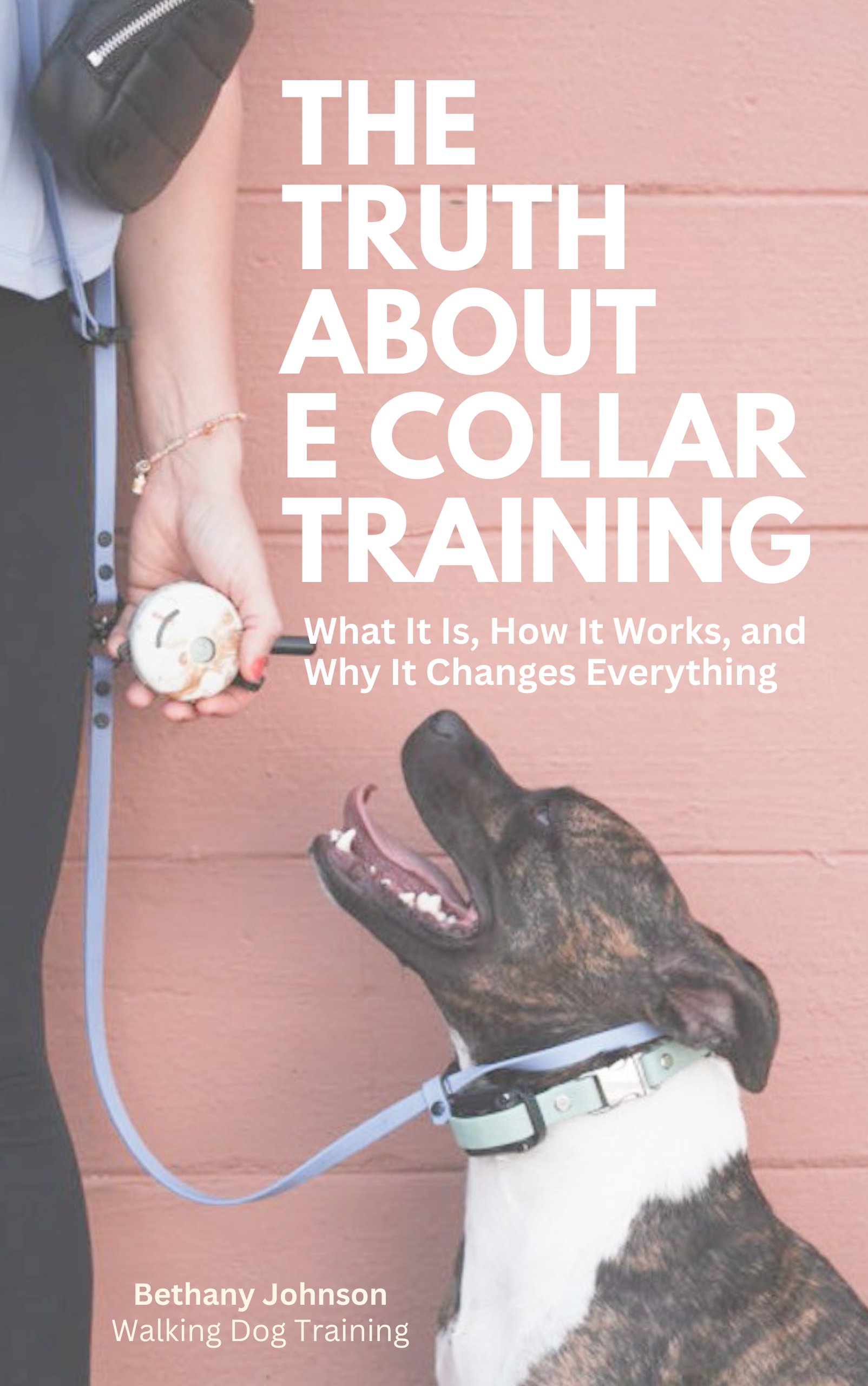
The Truth About E Collar Training — What It Is, How It Works, and Why It Changes Everything — is coming out in June. Written by Bethany Johnson of Walking Dog Training, it's the resource she wishes every curious, nervous, or skeptical dog owner had access to from the start.
Want to be the first to know about pre-sales, exclusive offers, and publication alerts? Join the book waitlist here!